.png)
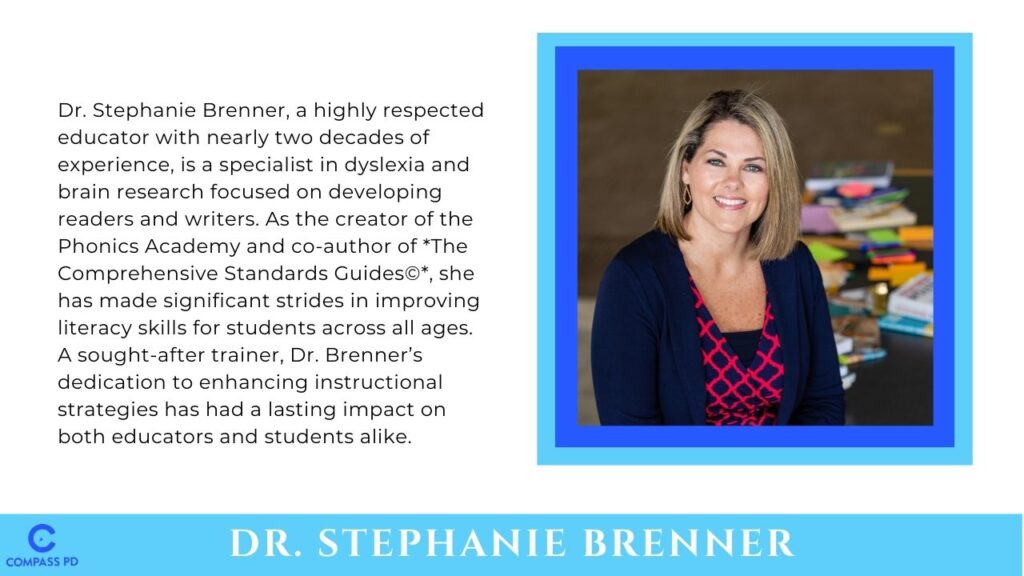
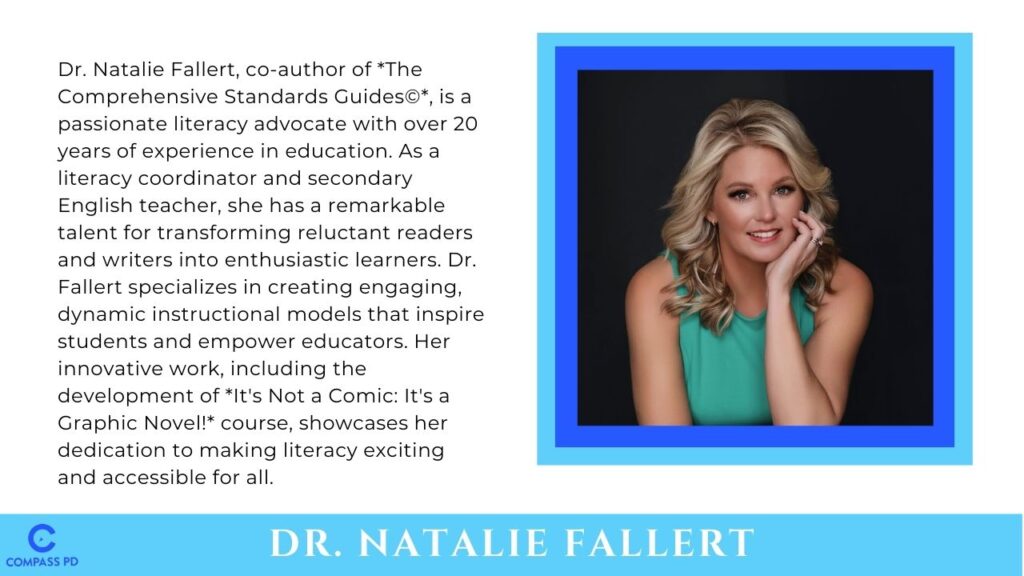
By Dr. Stephanie Brenner and Dr. Natalie FallertFeedback is one of the most powerful instructional tools we have—yet it is also one of the most misunderstood. In English Language Arts, especially, feedback can feel overwhelming because reading and writing skills are complex, interconnected, and often invisible. Still, when we provide feedback well, it becomes a genuine gift to students: a roadmap for learning, a confidence-builder, and a clear path toward mastery.
Across our forty-plus years in education, we’ve worked alongside countless teachers who ask the same essential question: “What does high-quality feedback really look like in ELA?”
No matter the grade level or text complexity, the heart of feedback stays the same: timely, specific information that moves learning forward.
In this post, we share the reflections, insights, and practical strategies we use when coaching teachers in classrooms every day.
What were your initial thoughts on feedback when you first entered education?
Stephanie: Feedback is one of the most powerful instructional tools we have—yet it is also one of the most misunderstood. In English Language Arts, especially, feedback can feel overwhelming because reading and writing skills are complex, interconnected, and often invisible. Still, when we provide feedback well, it becomes a genuine gift to students: a roadmap for learning, a confidence-builder, and a clear path toward mastery.
Natalie: Like many teachers, I don’t remember learning much about feedback during my undergraduate program. As a new high school English teacher, my feedback usually came at the end of an essay in the form of a filled-out rubric and a grade. Students rarely engaged with it. They glanced at the letter, tucked it away, and moved on.
Now I understand why: that level of feedback is what Sean Covey would call a lag measure—information that arrives after the learning has already happened.
I also spent time correcting grammar and mechanics that students rarely carried forward. Without actionable steps, students didn’t know what to do next.
What I know now is this: Feedback that improves learning must be timely, specific, and connected to the standard.
What does feedback based on standards look like?
Stephanie: Standards-based feedback is actionable. Students understand:
- where they are in the learning progression
- which micro-skills they’ve mastered
- what is the very next step on the path to proficiency
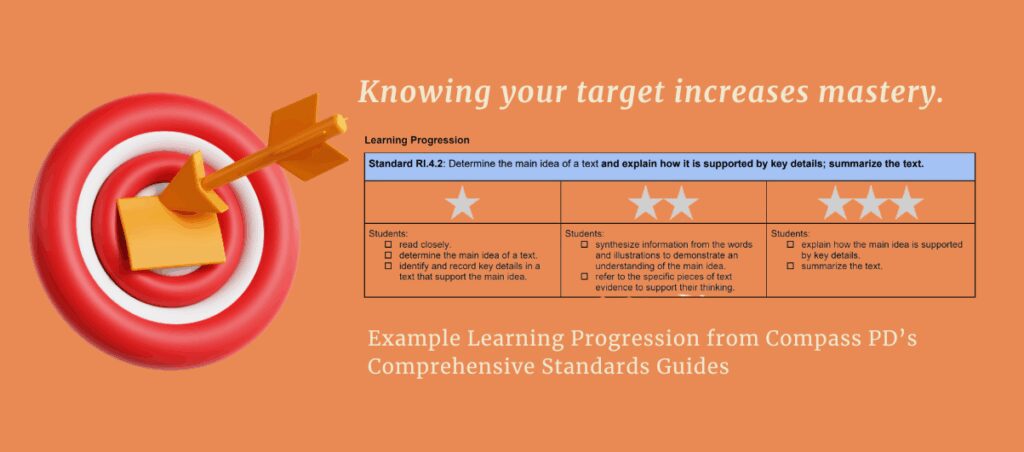
It breaks down a standard into small, teachable components—even the implicit ones required for mastery. When students can articulate their progress in this way, feedback becomes empowering instead of overwhelming.
Natalie: Standards-based feedback shifts students away from grades and toward learning. Here’s the difference:
Traditional Feedback: “I got a C. My introduction was weak, and I need to improve my grammar.”
Standards-Based Feedback: “I can establish an objective tone, but I lose it in the middle of my essay. I can use transitions between major sections, but I need to work on transitions within paragraphs.”
This second version is explicit, growth-focused, and directly tied to a standard.
What does high-quality feedback on reading standards look like?
Stephanie: Reading is complex because so much of it happens invisibly in the brain. To understand a reader, we analyze:
- accuracy
- rate
- expression
- phrasing
- comprehension
- problem-solving strategies
- and more
High-quality reading feedback makes the invisible visible. It requires multifaceted skills and gives students a clear, bite-sized step they can practice immediately.
For example, if the standard is “read with fluency,” feedback should never be simply: “Read more fluently.”
Instead, actionable feedback might sound like:
- “When you see ending punctuation, pause for one second before starting the next sentence.”
- “When you come to a word you don’t know, break it apart using prefixes, suffixes, or syllable types you recognize.”
- “When you see a question mark, adjust your tone to match the question.”
For comprehension standards such as identifying theme, feedback might sound like:
- “Track moments when the character learns something important—those often point to the theme.”
- “Notice symbols that repeat across the text; they can reveal deeper meanings.”
- “Pay attention to how one character’s actions impact another. Ask, ‘What is the lesson here?’”
This type of feedback makes reading skills concrete, accessible, and doable for students.
Natalie: Secondary classrooms often rely heavily on multiple-choice questions to measure comprehension. While these can diagnose correct versus incorrect, they cannot diagnose why. And without the why, feedback stalls.
The most effective reading feedback comes from:
- short conferences
- student annotations
- reading jots
- responses to text
- reading progressions tied to standards
Before giving feedback, teachers must understand precisely what the standard asks. That clarity keeps feedback focused, manageable, and aligned to the learning goal.
How do you choose what standard to give feedback on?
Stephanie: Two key questions guide my thinking:
- What is the objective of the task or lesson?
- Where is the student in the skill progression?
It’s easy to focus on low-level skills—like spelling errors—because they stand out. But when the objective is organization or clarity of claim, those surface errors are not the leverage points for learning.
If a student is writing a persuasive paragraph, I might set aside conventions to focus on:
- clarity of claim
- structure
- evidence
- reasoning
And remember: choosing something is better than choosing nothing.
Start somewhere. High-quality feedback on any meaningful standard moves learning forward.
Natalie: This decision becomes especially important when reading and writing intersect. A weak essay doesn’t always mean a writing problem—it sometimes signals a reading problem.
Teachers must:
- know the priority standard
- anchor feedback to that standard
- resist the urge to correct everything
- focus on thinking, not perfect products
As Joe Feldman’s work on bias-resistant grading reminds us: Feedback should reflect what a student knows—not our personal preferences or overcorrections.
Is feedback different across grade levels?
This is one of the most common questions we hear.
The simple answer is no.
The contexts change, the texts get more complex, and the skills advance—but the principles remain constant:
- Feedback is timely.
- Feedback is specific.
- Feedback offers a clear next step.
- Feedback focuses on learning, not evaluation.
Once teachers internalize those principles, feedback becomes more natural—and begins to feel like a genuine gift to both teacher and student.
In conclusion, feedback is not a task to check off the list. It is a relationship-building act that fosters clarity, confidence, and trust. Whether you teach second graders learning about story structure or sophomores analyzing rhetoric, feedback serves the same purpose: to help learners move forward.
When we practice giving meaningful, actionable feedback, we help students understand their own learning, take ownership of their growth, and become more capable readers, writers, and thinkers.
And that is a gift worth giving.
References
Feldman, J. (2019). Grading for equity: What it is, why it matters, and how it can transform schools and classrooms. Corwin, a SAGE Company.
Goodwin, B., Gibson, T., & Rouleau, K. (2020). Learning that sticks: A brain-based model for k-12 instructional design and delivery. McRel International.
Goodwin, B., Rouleau, K., Abla, C., Baptiste, K., Gibson, T., & Kimball, M. (2023). The new classroom instruction that works: The best research-based strategies for increasing student achievement. McRel International.
McChesney, C., Covey, S., & Huling, J. (2022). 4 DISCIPLINES OF EXECUTION: achieving your wildly important goals. Simon & Schuster.