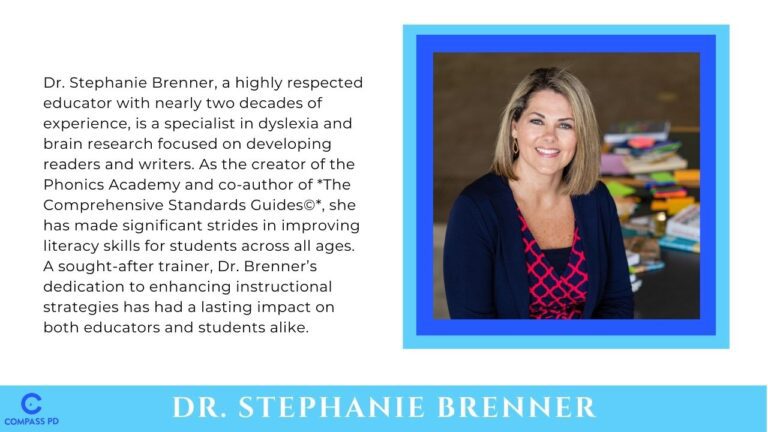
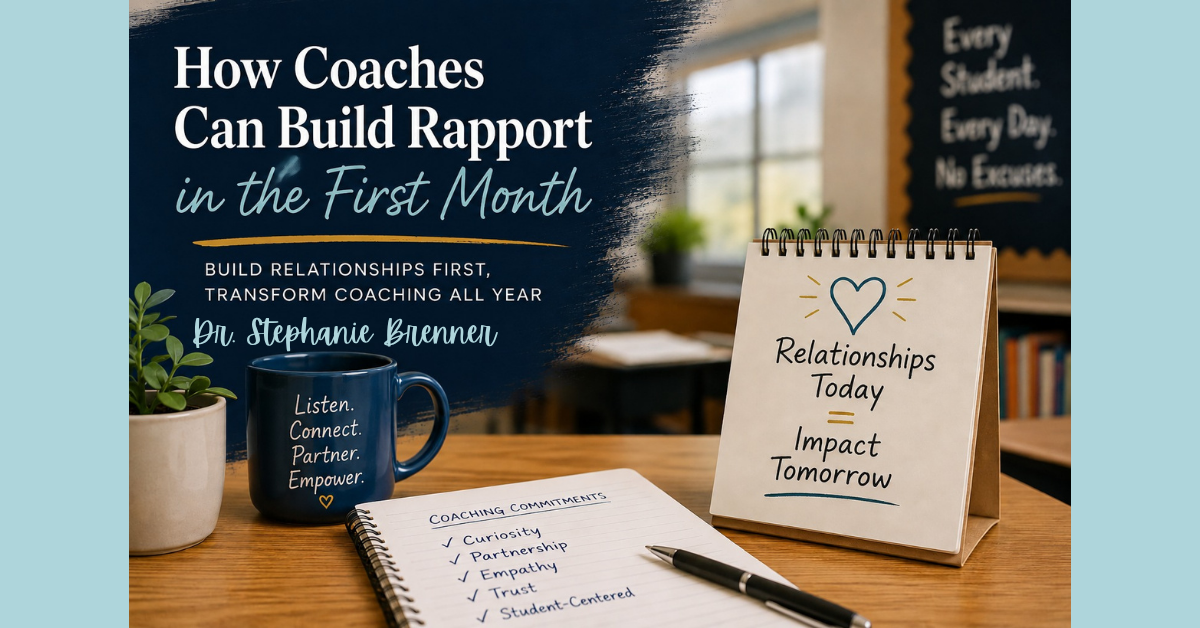
By Dr. Stephanie Brenner
Walk into almost any school during the first few weeks of August, and you'll find instructional coaches moving at full speed. They're organizing professional learning, reviewing assessment data, supporting curriculum implementation, modeling lessons, and trying to schedule classroom visits before calendars fill up. It's easy to feel like the work of coaching has already begun.
But the most effective instructional coaches understand something different. The first month of school isn't primarily about improving instruction. It's about building the trust that makes instructional improvement possible. Without trust, even the best coaching strategies fall flat. Feedback feels like evaluation. Questions feel like criticism. Classroom visits create anxiety instead of reflection.
Fortunately, decades of research from Elena Aguilar, Jim Knight, Diane Sweeney, Michael Bungay Stanier, Brené Brown, Arthur Costa and Robert Garmston's Cognitive Coaching, the Teachers College Coaching Institute, and literacy coaching experts Richard Bean and Robin Ippolito point toward the same conclusion: meaningful instructional coaching begins with meaningful relationships. Rather than focusing on launching coaching cycles immediately, instructional coaches should spend the first month making five intentional commitments.
Choose Curiosity Before Expertise
Instructional coaches often feel pressure to have the answers. Teachers ask questions. Administrators expect solutions. District initiatives demand implementation. It's natural to believe our value comes from being the instructional expert in the building.
Michael Bungay Stanier challenges that assumption. In The Coaching Habit, he argues that leaders often rush to solve problems before fully understanding them. His advice is surprisingly simple: stay curious longer than feels comfortable. When a teacher says, "My small groups just aren't working," resist the urge to immediately recommend a strategy. Instead, ask:
- Tell me more about what's happening.
- What have you noticed
- What have you already tried?
- What do you think is getting in the way?
- And what else?
Those last three words, "And what else?", may be the most powerful coaching question ever written. Cognitive Coaching reinforces this same principle through mediative questioning. Rather than giving teachers better answers, effective coaches ask better questions that help teachers clarify their own thinking.
Curiosity communicates respect. Advice, especially when offered too quickly, can unintentionally communicate assumptions. During the first month of school, your goal isn't to prove how much you know. It's to show teachers that you genuinely want to understand.
Build Trust Before You Build Practice
Jim Knight's Partnership Principles begin with a simple but powerful belief: coaching is a partnership between equals. Teachers are not projects to be fixed. They're professionals with expertise, experiences, and strengths that deserve respect.
Elena Aguilar echoes this idea throughout The Art of Coaching, reminding us that trust is built through authenticity, consistency, deep listening, and keeping commitments, not through impressive instructional knowledge. That means some of the most important coaching work during the first month may not look like coaching at all.
It might look like:
- helping organize classroom materials,
- locating instructional resources,
- covering a classroom for a few minutes,
- reading aloud to students,
- celebrating something going well,
- or simply stopping by to ask how the week is going.
None of these actions directly improve instruction. Every one of them strengthens relationships.
Teachers are far more likely to invite a coach into meaningful instructional conversations when they already know that coach is genuinely in their corner. Trust isn't built during one formal coaching cycle. It's built through dozens of small interactions that communicate, “I'm here to support you, not evaluate you.”

Create Psychological Safety Every Day
Trust is built one interaction at a time. It's built when confidentiality is protected. When commitments are honored. When strengths are noticed before weaknesses. When feedback is requested instead of imposed. When coaches admit they don't have every answer.
Brené Brown writes that vulnerability is the birthplace of learning, courage, and growth. Teaching is vulnerable work. Inviting another adult into your classroom is vulnerable. Trying a new instructional strategy is vulnerable. Looking honestly at student data is vulnerable. Instructional coaches cannot ask teachers to embrace vulnerability if they haven't first created psychological safety. Joellen Barkley, Elena Aguilar, and the Teachers College Coaching Institute all emphasize that adult learning depends upon relationships characterized by respect, trust, and emotional safety.
Brown offers another reminder that applies beautifully to coaching: "Clear is kind." Teachers don't need coaches who avoid difficult conversations. They need coaches who have those conversations with honesty, empathy, and respect. Psychological safety doesn't mean lowering expectations. It means creating an environment where growth feels possible instead of threatening.
Lead with Empathy
The first month of school is exciting. It's also exhausting.
Teachers are learning student names, establishing routines, communicating with families, navigating curriculum changes, responding to behaviors, and trying to meet the needs of every learner in front of them. Before coaches ask teachers to take instructional risks, they must first acknowledge the reality of the work teachers are doing.
Brené Brown reminds us that empathy isn't about fixing someone else's struggle. It's about making sure they don't face it alone. One of the simplest ways coaches build rapport is by acknowledging what teachers are carrying. It can sound like:
- "I know this week has been overwhelming."
- "You're juggling a lot right now."
- "I can see how much thought you've put into your classroom."
Those statements don't lower expectations. They communicate understanding.
Teachers don't need coaches who pretend teaching is easy. They need coaches who remember what teaching feels like. Empathy creates relational capital, and relational capital creates the conditions where honest coaching conversations can happen later.
Focus on Students, Not Teacher Deficits
One of Diane Sweeney's greatest contributions to instructional coaching is shifting the conversation away from fixing teachers and toward improving student learning. That subtle shift changes everything. Instead of asking, "What does this teacher need to do differently?" student-centered coaching asks, "What do students need next, and how can we work together to help them get there?"
Richard Bean and Robin Ippolito make a similar argument in their work on literacy coaching. Effective coaching begins by understanding teachers' instructional contexts, recognizing their strengths, and partnering to solve authentic classroom challenges.
This approach reduces much of the defensiveness teachers naturally exhibit when they perceive that they or their work are being judged. The coach and teacher become partners studying student learning together. The teacher is no longer the problem to solve. Student learning becomes the shared work.
That's a conversation most teachers are eager to join.
The Most Important Work Happens Before the Coaching Cycle
It's easy to believe that coaching begins with a classroom observation, a feedback conversation, or the start of a coaching cycle. In reality, those moments are only effective because of the relationships that precede them. Trust is built in everyday interactions like a genuine conversation in the hallway, a thoughtful question instead of immediate advice, a willingness to listen before offering solutions, or a simple act of support during a hectic week. Those moments may seem small, but together they create the relational foundation that makes meaningful coaching possible.
Across the coaching research, one idea rises above the rest. People are more willing to grow when they feel respected, valued, and psychologically safe. Whether through partnership, curiosity, student-centered conversations, transformational coaching, or reflective questioning, the goal is to create the conditions where teachers are willing to think deeply, take instructional risks, and continuously refine their practice. Before instructional expertise can influence practice, relational trust must earn influence.
The first month of school offers instructional coaches a unique opportunity. Every conversation, classroom visit, and interaction either strengthens or weakens the trust that future coaching depends upon. Coaches who intentionally invest in relationships during these opening weeks are not delaying the real work. They are doing it! By building trust before focusing on instructional change, they transform coaching from something teachers comply with into something they genuinely value. And when that happens, coaching becomes more than a strategy for improving instruction. Coaching becomes a catalyst for lasting growth for both teachers and students.
References
Aguilar, E. (2013). The Art of Coaching: Effective Strategies for School Transformation. Jossey-Bass.
Barkley, S. G. (2010). Instructional Coaching with the End in Mind. Corwin.
Bean, R. M., & Ippolito, J. (2009). Literacy Coaching: Working with Teachers to Increase Student Achievement. International Reading Association.
Brown, B. (2018). Dare to Lead: Brave Work. Tough Conversations. Whole Hearts. Random House.
Costa, A. L., & Garmston, R. J. (2016). Cognitive Coaching: Developing Self-directed Leaders and Learners (3rd ed.). Rowman & Littlefield.
Knight, J. (2021). The Definitive Guide to Instructional Coaching: Seven Factors for Success. Corwin.
Stanier, M. B. (2016). The Coaching Habit: Say Less, Ask More & Change the Way you Lead Forever. Box of Crayons Press.
Sweeney, D. (2011). Student-centered Coaching: A Guide for K–8 Coaches and Principals. Corwin.
About the Author